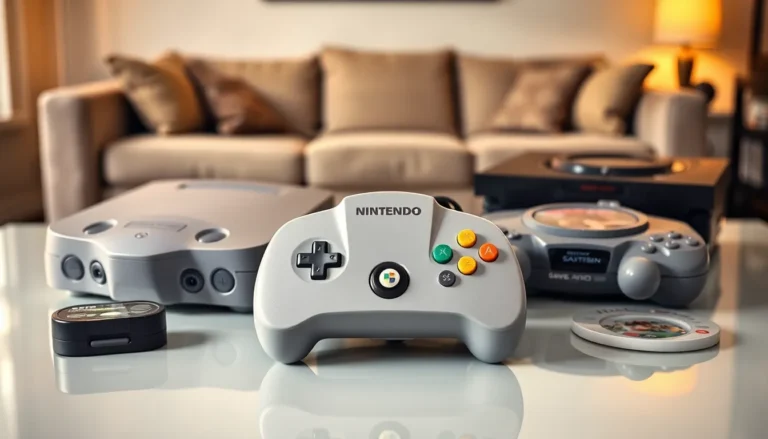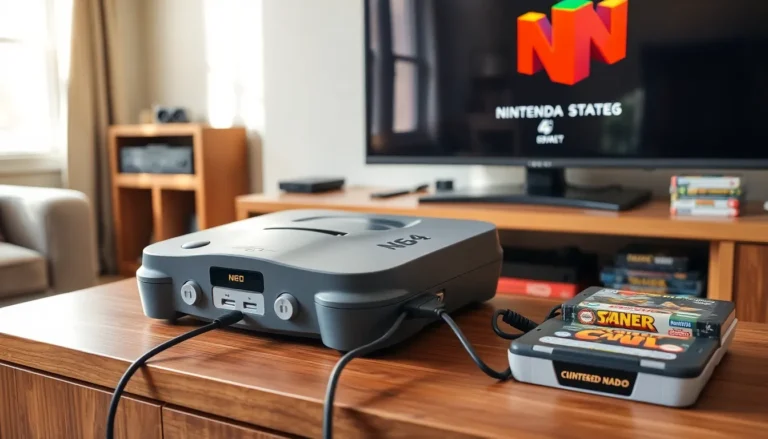


The Nintendo 64 arrived in 1996 and changed video games forever. This 64-bit console introduced millions of players to 3D gaming, delivering experiences that felt impossible on earlier hardware. From its unique three-pronged controller to genre-defining titles like Super Mario 64 and The Legend of Zelda: Ocarina of Time, the Nintendo 64 earned its place in gaming history. The console sold nearly 33 million units worldwide and created memories that players still cherish decades later. This article explores what made the Nintendo 64 special, its hardware innovations, legendary game library, and the lasting impact it left on the industry.
Table of Contents
ToggleKey Takeaways
- The Nintendo 64 launched in 1996 and sold nearly 33 million units worldwide, introducing millions of players to 3D gaming.
- Nintendo’s decision to use cartridges instead of CDs enabled instant load times but limited third-party support and storage capacity.
- Iconic games like Super Mario 64, The Legend of Zelda: Ocarina of Time, and GoldenEye 007 set new standards for 3D game design and multiplayer gaming.
- The Nintendo 64 controller popularized the analog stick, Z-trigger, and rumble feedback—features that became industry standards still used today.
- Built-in four controller ports made the Nintendo 64 the ultimate local multiplayer console, shaping how a generation experienced social gaming.
- The console’s legacy endures through Nintendo Switch Online, collector demand, and its lasting influence on modern game design.
The Launch and History of the N64
Nintendo released the Nintendo 64 in Japan on June 23, 1996, followed by North America on September 29 of that same year. The console arrived during an intense period of competition with Sony’s PlayStation and Sega’s Saturn. Nintendo chose the name “Nintendo 64” to highlight its 64-bit processor, a significant leap from the 16-bit Super Nintendo Entertainment System.
The N64 launched with just two games in North America: Super Mario 64 and Pilotwings 64. Even though this small lineup, Super Mario 64 alone drove massive sales. Stores sold out of the Nintendo 64 within hours of launch, and demand remained high through the holiday season.
Nintendo made a controversial decision to stick with cartridges instead of switching to CD-ROMs like its competitors. This choice had consequences. Cartridges cost more to produce, which led to higher game prices. They also held less data than CDs, limiting what developers could include. Several major third-party publishers, including Square (makers of Final Fantasy), moved to PlayStation because of these limitations.
Still, cartridges offered advantages. They loaded games instantly, no waiting for disc reads. They also proved harder to pirate than CDs. The Nintendo 64 sold steadily throughout its lifespan, reaching approximately 32.93 million units by the time Nintendo discontinued it in 2002.
Groundbreaking Hardware and Technical Innovations
The Nintendo 64 packed impressive hardware for its era. At its core sat a 64-bit NEC VR4300 CPU running at 93.75 MHz. The console also featured a custom Reality Coprocessor developed with Silicon Graphics, the same company that built high-end graphics workstations for Hollywood.
This hardware allowed the Nintendo 64 to render 3D environments with smooth textures and anti-aliasing, features rare in home consoles at the time. Games could display fog effects, dynamic lighting, and detailed character models that impressed players accustomed to 16-bit sprites.
Nintendo included 4 MB of RAM in the base system. Later, the company released the Expansion Pak, which doubled this to 8 MB. Some games required the Expansion Pak to run (like Donkey Kong 64), while others used it to unlock higher resolutions or additional features.
The Nintendo 64 supported four controller ports built directly into the console. This design made local multiplayer simple and accessible. Players didn’t need adapters or extra hardware to enjoy four-player games like GoldenEye 007 or Mario Kart 64. This feature shaped how an entire generation experienced multiplayer gaming.
The cartridge format, even though its limitations, enabled the Nintendo 64 to deliver near-instant load times. Players could jump into games immediately, a stark contrast to the lengthy loading screens on disc-based systems.
Iconic Games That Shaped the Platform
The Nintendo 64 library may have been smaller than PlayStation’s, but it contained some of the most influential games ever made. Quality over quantity defined this console.
Super Mario 64 launched alongside the Nintendo 64 and redefined what platformers could be. The game gave players full 3D movement through expansive worlds, with a camera system that became the template for countless games that followed. Critics and players praised it immediately, and it remains a masterpiece today.
The Legend of Zelda: Ocarina of Time arrived in 1998 and set new standards for action-adventure games. Its Z-targeting combat system solved a fundamental problem of 3D action games: how to fight enemies in three-dimensional space. Many games still use variations of this system. Ocarina of Time frequently appears on lists of the greatest games ever made.
GoldenEye 007 proved that first-person shooters could work on consoles. Its four-player split-screen mode became legendary. Friends gathered around televisions for hours, playing deathmatch in the Complex or Facility maps. The game showed that the Nintendo 64 could deliver mature, action-packed experiences.
Other standouts included Mario Kart 64, which perfected multiplayer racing: Super Smash Bros., which created an entirely new fighting game genre: and Banjo-Kazooie, which expanded on Super Mario 64’s foundation with charm and creativity.
The Controller That Changed Everything
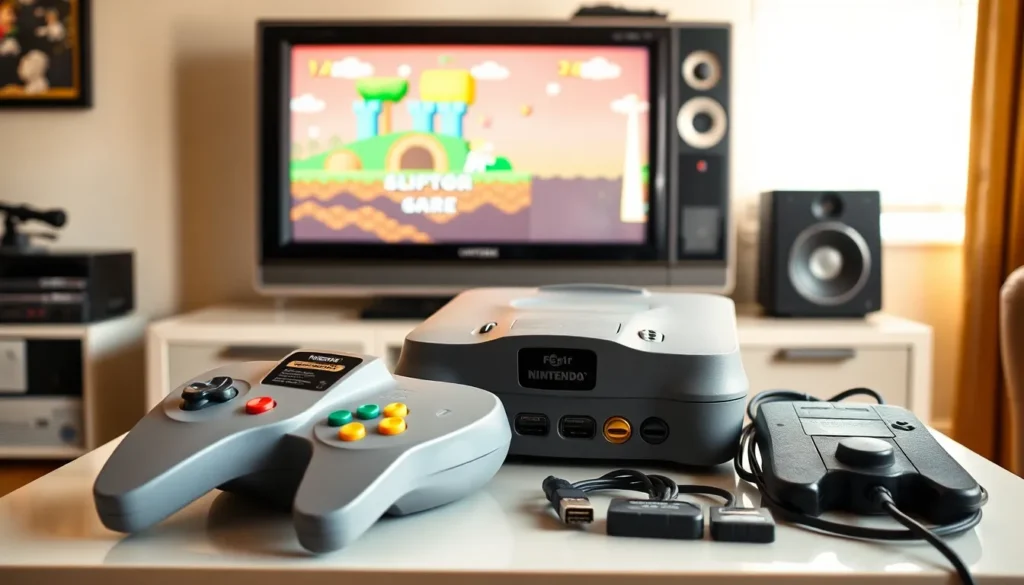
The Nintendo 64 controller looked like nothing before it. Its three-pronged design confused some players at first glance. But this unusual shape served a purpose: it gave developers multiple grip options for different game types.
The center prong housed the most important innovation, an analog stick. While not the first analog stick in gaming, the Nintendo 64 controller popularized it. The stick allowed precise 360-degree movement, essential for 3D games. Players could walk slowly by tilting gently or run by pushing fully. This nuance transformed how games controlled.
Nintendo also introduced the Z-trigger on the back of the center prong. This trigger button enabled new control schemes, particularly for first-person games. GoldenEye 007 used the Z-trigger for aiming, creating a control layout that influenced shooters for years.
The controller featured a slot on the back for accessories. The Controller Pak saved game data for titles that didn’t use cartridge-based saving. The Rumble Pak, released with Star Fox 64, added force feedback to games. When something exploded or a character took damage, the controller vibrated. This feature became standard in virtually all game controllers that followed.
The Nintendo 64 controller’s influence extends beyond its generation. The analog stick placement, trigger buttons, and rumble feedback all became industry standards that persist today.
Legacy and Lasting Impact on Gaming
The Nintendo 64 shaped modern gaming in ways that still matter. Its approach to 3D game design established templates that developers continue to follow. The camera systems, control schemes, and level designs pioneered on this console became foundational knowledge for the industry.
Local multiplayer defined the Nintendo 64 experience. Four friends crowded around a single television, playing Mario Party, wrestling in WWF No Mercy, or racing through Rainbow Road. This social gaming experience created bonds and memories that online multiplayer can’t quite replicate.
The console also influenced Nintendo’s future hardware decisions. The GameCube controller refined ideas from the Nintendo 64 pad. The Wii’s emphasis on innovative controls traced back to experiments like the Rumble Pak. Even the Switch’s focus on local multiplayer echoes the Nintendo 64 era.
Collector interest in the Nintendo 64 has grown significantly. Original cartridges, especially for rare titles, command high prices. Nintendo has acknowledged this nostalgia by including Nintendo 64 games in its Switch Online service, introducing these classics to new audiences.
The console faced legitimate criticism during its lifetime, limited third-party support, expensive games, and cartridge constraints hurt it competitively. But time has been kind to the Nintendo 64. Players remember the highs: the first time they entered Peach’s Castle, the shock of Ocarina of Time’s opening, the chaos of four-player GoldenEye matches.