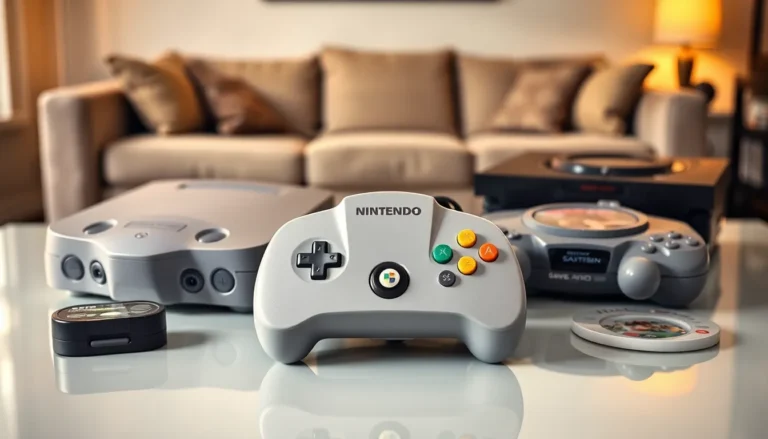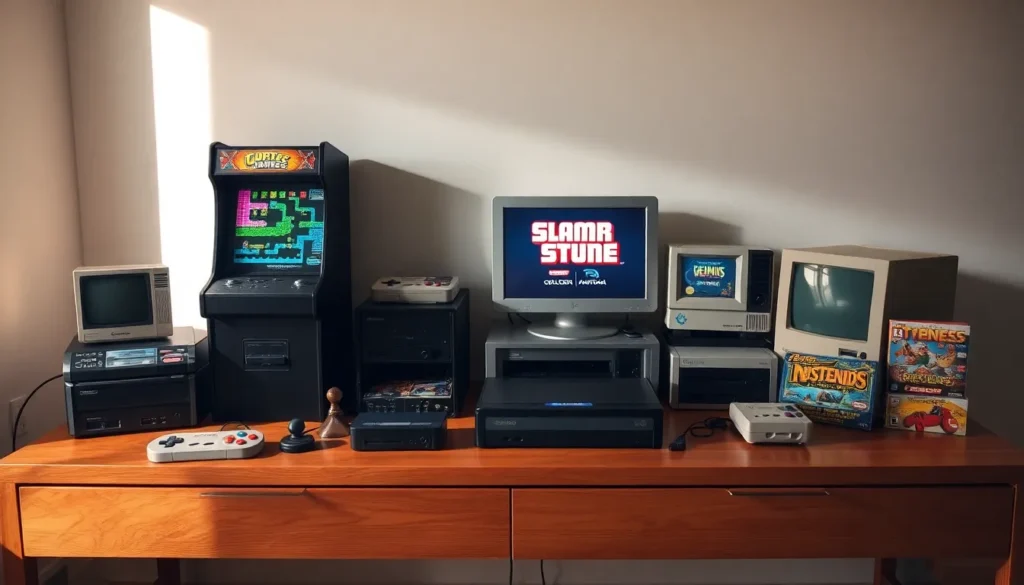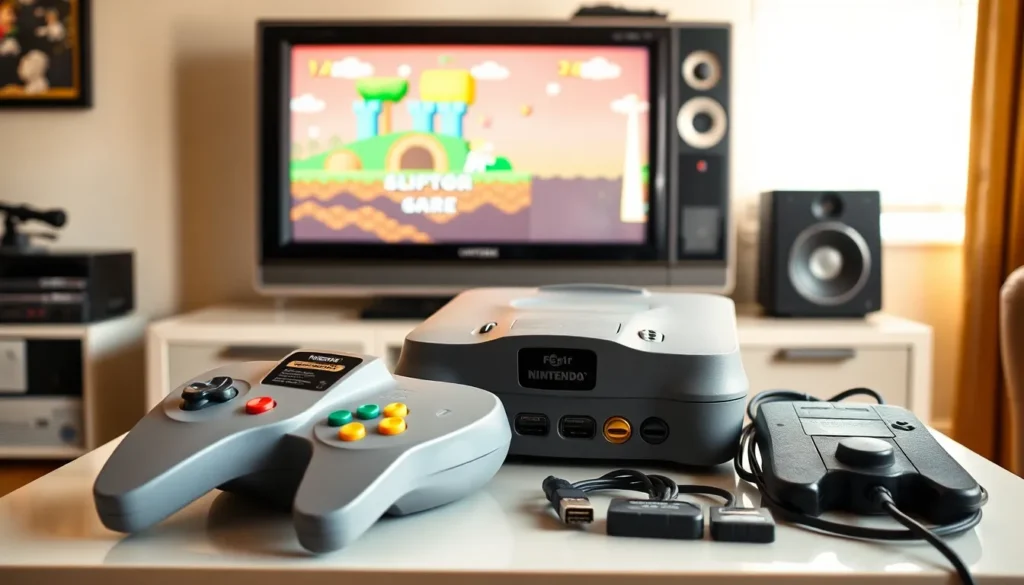
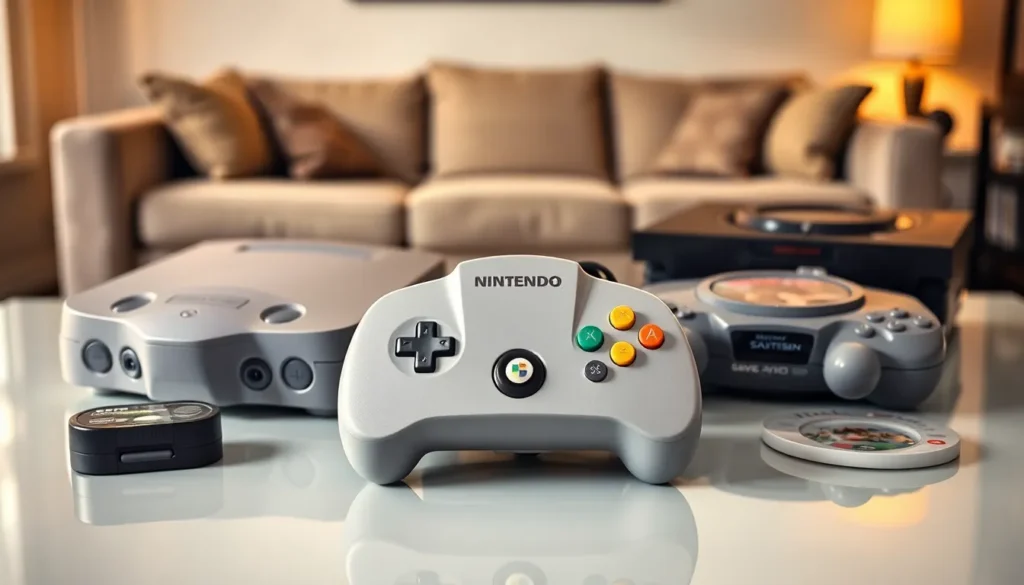

The Nintendo 64 vs PlayStation and Sega Saturn debate shaped a generation of gamers. These three consoles launched between 1994 and 1996 and fought for dominance in the 32/64-bit era. Each system brought distinct strengths to living rooms worldwide. The PlayStation offered CD-based gaming with massive storage. The Sega Saturn delivered arcade-quality 2D graphics. The Nintendo 64 pushed 3D graphics with its cartridge-based approach. This showdown examines how these consoles stacked up against each other. Gamers still argue about which system deserved the crown. The answer depends on what players valued most, raw power, game selection, or innovation.
Table of Contents
ToggleKey Takeaways
- The Nintendo 64 vs PlayStation and Sega Saturn debate centered on raw power, game libraries, and media formats during the 32/64-bit console war.
- Nintendo 64 delivered superior 3D graphics and introduced the first analog stick on a major console, revolutionizing gameplay control.
- PlayStation dominated with over 1,100 games and strong third-party support, while the N64 offered fewer but critically acclaimed exclusives like Super Mario 64 and Ocarina of Time.
- Nintendo’s cartridge format provided instant load times but limited storage, causing major developers like Square to switch to Sony’s CD-based PlayStation.
- PlayStation won the sales war with 102 million units, but the Nintendo 64 vs its rivals shaped lasting innovations like analog controls and rumble feedback still used today.
Hardware and Technical Specifications
The Nintendo 64 vs its rivals starts with raw processing power. Nintendo’s console featured a 64-bit NEC VR4300 CPU running at 93.75 MHz. This gave developers serious muscle for 3D rendering. The system included 4MB of RAM, expandable to 8MB with the Expansion Pak.
The PlayStation ran a 32-bit R3000A processor at 33.8 MHz. Sony’s console packed 2MB of main RAM and 1MB of video RAM. Even though lower specs on paper, the PlayStation handled 3D graphics impressively well.
Sega’s Saturn used a dual-CPU setup with two Hitachi SH-2 processors at 28.6 MHz each. This architecture proved difficult for developers to master. The Saturn excelled at 2D sprite-based games but struggled with 3D compared to its competitors.
In real-world performance, the Nintendo 64 produced smoother textures and handled complex 3D environments better. Games like Super Mario 64 showcased this power. But, the PlayStation’s simpler architecture meant developers could squeeze more consistent results from the hardware. The Saturn’s dual processors created a steep learning curve that many third-party studios avoided.
Game Library and Exclusive Titles
The Nintendo 64 vs PlayStation comparison often comes down to games. Sony’s console boasted over 1,100 North American releases. The N64 had roughly 296 games in the same region. Sega Saturn landed somewhere in between with about 600 titles.
Nintendo’s first-party lineup remains legendary. Super Mario 64 redefined 3D platforming. The Legend of Zelda: Ocarina of Time set standards for adventure games. GoldenEye 007 proved console shooters could work. Perfect Dark, Star Fox 64, and Mario Kart 64 rounded out an exceptional roster.
Sony countered with Final Fantasy VII, Metal Gear Solid, and Resident Evil. The PlayStation became the home for RPGs and mature-themed titles. Third-party support gave Sony a massive edge in variety.
The Saturn struggled in Western markets but thrived in Japan. Panzer Dragoon Saga, Virtua Fighter 2, and Nights into Dreams showcased the hardware. Fighting games and 2D shooters found a comfortable home on Sega’s machine.
Quality versus quantity defined the Nintendo 64 vs PlayStation debate. Nintendo delivered fewer games, but its exclusives achieved near-universal acclaim. Sony provided breadth and diversity. Sega catered to niche audiences with arcade-style experiences.
Controller Design and Gameplay Experience
The Nintendo 64 vs its competitors introduced a revolution in controller design. Nintendo’s three-pronged controller featured the first analog stick on a major console. The Z-trigger underneath added new input options. Four controller ports came standard, a first for home consoles.
This design changed how developers approached 3D movement. Super Mario 64 used the analog stick for precise, 360-degree control. The controller felt strange at first, but players adapted quickly. The Rumble Pak accessory added force feedback to compatible games.
Sony’s original PlayStation controller used a traditional layout without analog sticks. The DualShock arrived later, adding twin sticks and vibration. This design became the template for modern gamepads.
Sega’s Saturn controller worked brilliantly for 2D games. Six face buttons suited fighting games perfectly. But, the original pad lacked an analog option, limiting 3D gameplay. The 3D Control Pad arrived later but saw limited support.
The Nintendo 64 vs PlayStation controller battle sparked lasting changes. Nintendo pioneered analog control and rumble features. Sony refined these ideas into the DualShock standard. Both approaches influenced every controller that followed.
Media Format: Cartridge vs CD-ROM
The Nintendo 64 vs CD-based rivals created the era’s biggest format war. Nintendo stuck with cartridges while Sony and Sega embraced optical discs. This choice had massive consequences.
Cartridges offered faster load times, almost instant in most cases. They proved difficult to pirate. Memory could be built directly into the cart for saves. But, cartridges cost significantly more to manufacture. Storage topped out at 64MB, though most games used far less.
CD-ROMs held up to 700MB of data. This allowed full motion video, voice acting, and orchestrated soundtracks. Production costs ran lower, making games cheaper for publishers. The downside? Load times frustrated players. Discs scratched easily and wore out over time.
The Nintendo 64 vs PlayStation format decision shaped game development. Square left Nintendo for Sony, citing storage limitations. Final Fantasy VII needed three CDs, impossible on N64 cartridges. Many RPGs and cinematic games followed Square to PlayStation.
Nintendo argued that cartridges delivered better gameplay experiences. Immediate loading kept players engaged. But developers wanted the creative freedom that CDs provided. This format choice cost Nintendo significant third-party support.
Legacy and Cultural Impact
The Nintendo 64 vs PlayStation rivalry defined late-90s gaming culture. Each console left distinct marks on the industry.
PlayStation won the sales war with over 102 million units worldwide. It transformed Sony from a newcomer into a gaming giant. The console brought gaming to older audiences and established franchises that continue today.
Nintendo 64 sold roughly 33 million units, a distant second. Yet its cultural impact exceeded those numbers. N64 parties became social events. Four-player matches in GoldenEye and Mario Kart created shared memories. The console cemented Nintendo’s reputation for innovation and quality over quantity.
Sega Saturn sold around 9.5 million units globally. The poor performance contributed to Sega’s exit from the hardware business. But, the Saturn earned devoted fans who still praise its unique library.
The Nintendo 64 vs PlayStation era introduced analog controls, rumble feedback, and 3D gameplay standards. Both consoles pushed technology forward. Their competition forced rapid innovation that benefited all gamers.
Collectors now prize all three systems. Prices for rare N64 and Saturn games have skyrocketed. The nostalgia surrounding this generation remains powerful. These consoles shaped the gaming habits of an entire generation.